
Lightning Strike Slot Features Explained: Megaways Mechanics, Jackpot Potential, Bonus Features, and High Volatility
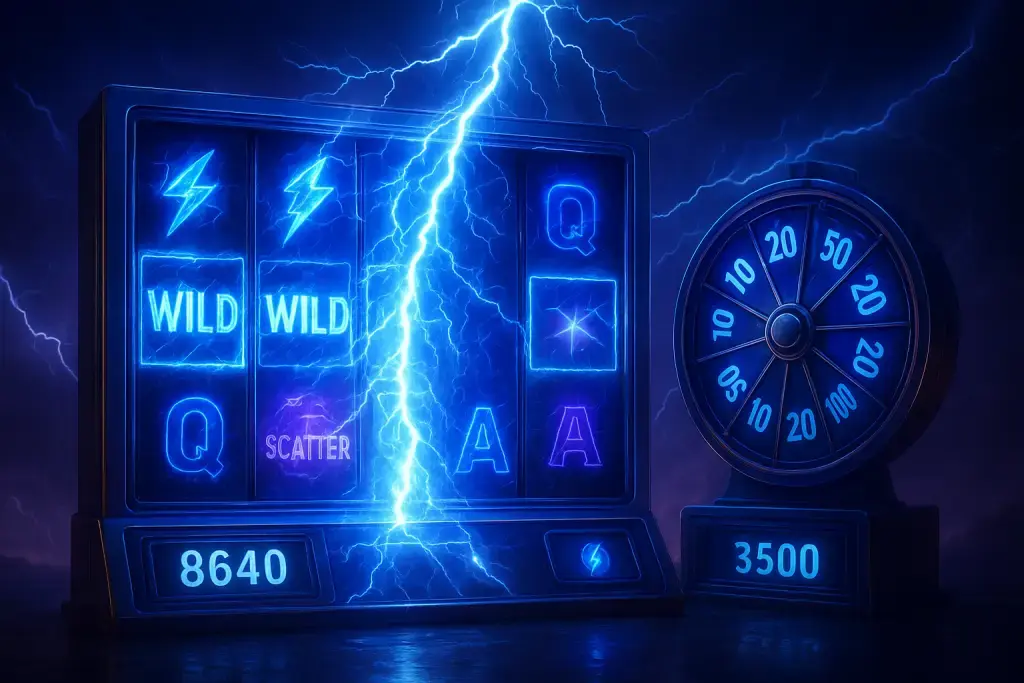
Authored by satu38slot.club, 29 Oct 2026
A single reel cascade on a Megaways grid can produce over a hundred thousand possible symbol combinations before a player even touches the bonus round. That number alone explains why this engine has become the backbone of so many modern slot releases, and why a title built around a lightning-strike theme fits the format so naturally. Thunder and chaos are visual metaphors for what the mechanics actually do under the hood: unpredictable reel heights, cascading wins, and sudden multiplier spikes that can turn a modest stake into a disproportionately large return. For players who have spent time with fixed-payline slots, the jump to a lightning strike slot built on Megaways math can feel disorienting at first. The reels change shape every spin. The bonus triggers work differently. The volatility curve behaves in ways that reward patience rather than frequency. This article breaks down exactly how these systems operate, what the jackpot structures look like, which bonus features actually move the needle, and why high volatility Megaways slots demand a different mindset than traditional games. Readers who finish this piece will understand the mechanics well enough to judge any lightning-themed Megaways title on its merits rather than its marketing.
What Makes a Lightning Strike Slot Unique
Lightning strike slots lean on a visual language that is immediately recognizable: darkened skies, electric blue symbol trims, crackling sound design, and screen-wide flash effects timed to big wins. But the theme is not just cosmetic. Developers typically use the lightning motif to justify the randomness baked into the Megaways engine itself. A sudden strike becomes the narrative explanation for a multiplier jump, an unexpected cascade, or a reel reshuffle. The theme and the mechanic reinforce each other, which is part of why lightning-based titles have become a recurring category rather than a one-off gimmick.
What separates a lightning strike slot from a generic electrical-themed game is the consistency of its feature set. Most titles in this category combine a handful of recognizable elements: a Megaways reel structure, a cascading win mechanic, a multiplier ladder that climbs during bonus rounds, and some form of randomly triggered "strike" event that can appear on any spin, base game or bonus. These lightning strike slot features are designed to layer unpredictability on top of unpredictability, which is precisely what pushes many of these games into high volatility territory.
How Megaways Slot Mechanics Work
Megaways is not a theme or a brand of game; it is a licensed mathematical engine that changes how reels generate winning combinations. Instead of a fixed number of symbols per reel, each reel can display a different number of symbols on every spin, typically ranging from two to seven. Because the number of symbols per reel varies, the total number of ways to win changes from spin to spin as well. A six-reel Megaways game can generate anywhere from a few thousand to well over one hundred thousand ways to win, depending on how many symbols land on each reel in that particular spin.
This variability is the core reason Megaways slot mechanics feel so different from traditional 20- or 25-payline games. There is no static paytable position to memorize. The win potential literally expands and contracts in real time, and players watching the reel heights shift can sense when a spin is building toward a bigger combination before the cascade even resolves.
Reel Structure and Cascading Wins
Cascading wins, sometimes called tumbling or avalanche mechanics, are almost universally paired with Megaways engines. When a winning combination lands, the symbols involved in that win disappear rather than being replaced by a standard new spin. New symbols drop in from above to fill the gaps, and the game checks again for new winning combinations using the same ways-to-win calculation. This can continue for several cascades in a single spin, each one potentially triggering a new multiplier increase.
In a lightning strike slot, this cascade sequence is often where the thematic effects are most visible. A strike animation might fire between cascades, adding wild symbols, boosting a multiplier counter, or clearing a section of the grid entirely. The cascade mechanic is what allows a single spin to produce a chain of wins that compounds rather than resets, which is a major contributor to the game's overall volatility profile.
Symbol Combinations and Win Calculation
Because the number of symbols per reel changes, win calculation in Megaways games works differently from standard slots. A win is counted when matching symbols appear on adjacent reels starting from the leftmost reel, regardless of their vertical position within that reel. The payout for a given symbol combination is then multiplied by the total ways-to-win active for that spin, not by a fixed line value. This is why the same three-symbol combination can pay drastically different amounts from one spin to the next, depending entirely on how many symbols occupied each reel.
The practical takeaway for players is that symbol frequency matters more than exact position. A game can look visually calm and still be building toward a large payout simply because the reels have expanded to their maximum height, multiplying the number of active ways to win.
Lightning Strike Jackpot Structures
Jackpot mechanics in lightning strike slots tend to fall into two broad categories: fixed-value jackpots tied to a bonus wheel or pick-style feature, and progressive jackpots that grow with every real-money wager placed across the game's network. The lightning strike jackpot label is often used to describe a tiered jackpot ladder, where multiple prize levels exist simultaneously and a bonus round determines which tier the player lands on.
These tiered systems usually follow a predictable naming pattern, moving from a smaller, more frequently awarded prize up to a rare top-tier jackpot that can be worth hundreds or thousands of times the triggering bet. The appeal is straightforward: players are not simply chasing one enormous number, they are working through a structured sequence of outcomes where each tier feels like a meaningful step rather than a binary win-or-lose moment.
Fixed Jackpots vs Progressive Jackpots
Fixed jackpots pay a predetermined amount regardless of how many players have wagered on the game. Their value does not grow over time, but they tend to trigger more reliably because the game's internal odds are calibrated to award them within a known frequency range. Progressive jackpots, by contrast, pool a small percentage of every wager into a growing prize fund. That fund resets to a seed value once won and then begins climbing again. Progressive versions of a lightning strike jackpot can take considerably longer to hit, but the ceiling on the potential payout is far higher.
| Jackpot Type | How It Grows | Typical Hit Frequency | Payout Ceiling |
|---|---|---|---|
| Fixed Jackpot | Does not grow; fixed value set by the game | More predictable, built into base math | Capped at a known maximum |
| Progressive Jackpot | Grows with a share of every wager across the network | Less predictable, can take much longer | Uncapped or very high ceiling |
Triggering the Jackpot Feature
Most jackpot features in this genre are triggered one of three ways: landing a set number of scatter or bonus symbols, randomly on any spin through a lightning strike event, or by accumulating a hidden counter that fills during regular play and eventually unlocks a bonus wheel or pick screen. Random triggers are particularly common in lightning-themed games because the strike motif gives developers a built-in excuse for the bonus to fire unpredictably, even on a losing base-game spin. This unpredictability is a deliberate design choice that reinforces the high-risk, high-reward identity of the game.
Core Bonus Features to Know
Online slot bonus features in the lightning strike category tend to cluster around a few recurring mechanics, each designed to interact with the Megaways engine rather than sit beside it as a separate system. Understanding these features individually makes it easier to judge whether a specific title leans toward frequent small boosts or rare, explosive payouts.
- Multiplier ladders that climb with each consecutive cascade during a single spin or bonus round
- Expanding wild symbols that appear after a lightning strike animation and remain locked for subsequent cascades
- Free spins rounds with retained multipliers that carry over from spin to spin rather than resetting
- Random strike events in the base game that can add wilds, extra multipliers, or trigger a mini bonus without needing scatter symbols
- Bonus buy or feature purchase options that let players pay a fixed multiple of their stake to enter the free spins round directly
Free Spins and Multiplier Mechanics
Free spins rounds in lightning strike slots are usually where the game's Megaways slot mechanics are allowed to run at full intensity. Reel heights are often set to their maximum or near-maximum during these rounds, and multipliers accumulated from cascades typically persist for the duration of the bonus rather than resetting after each spin. This persistence is what allows free spins to produce the largest wins in the game, since a multiplier that starts at 2x and climbs steadily across ten or fifteen spins can turn an otherwise modest cascade into a five- or six-figure multiple of the stake.
Wild Symbols and Special Triggers
Wild symbols in this genre frequently do more than substitute for other symbols. In many lightning strike titles, wilds carry their own multiplier value, stack on top of other wilds, or expand to cover an entire reel once triggered by a strike animation. Special triggers, such as a lightning bolt scatter that appears only during cascades, are often the mechanism that separates an average spin from a standout one. Recognizing which symbol does which job on the paytable before playing is a practical step that prevents confusion mid-session.
Comparing High Volatility Megaways Slots
Volatility describes how a slot distributes its payouts over time. A low volatility game pays smaller amounts frequently, smoothing out the bankroll swings. A high volatility game pays rarely, but when it pays, the amount can be dramatically larger relative to the stake. High volatility Megaways slots, lightning-themed or otherwise, tend to sit at the far end of this spectrum because the combination of expanding reels, cascading wins, and climbing multipliers naturally produces long dry spells punctuated by sharp spikes.
This volatility profile is not accidental. The same mechanics that create the possibility of a five-figure multiplier also mean that most spins will resolve with no win at all once the cascade sequence ends. Players coming from lower-volatility games often misjudge this pattern, expecting a steady trickle of small wins that this category of slot is simply not built to deliver.
Volatility Indicators and What They Mean
Developers rarely publish exact volatility formulas, but most games display a general indicator, often a star rating or a labeled scale from low to extreme. These indicators reflect how the game's internal math model distributes outcomes, factoring in hit frequency, average win size, and the spread between typical wins and maximum wins. For a lightning strike slot, an "extreme" or "very high" rating usually signals that the bulk of its advertised maximum win potential is concentrated in rare bonus round outcomes rather than base game play.
Session Length and Bankroll Considerations
Because high volatility Megaways slots can produce extended losing streaks between meaningful wins, session planning matters more here than in lower-volatility games. A bankroll that would comfortably last an hour on a low-volatility title can be exhausted far faster on a high-volatility one, simply because there are fewer small wins to replenish the balance between larger bonus triggers.
- Set a loss limit before playing and treat it as a hard stop rather than a flexible target
- Expect long stretches without a bonus trigger, since free spins rounds are the primary vehicle for large wins
- Avoid chasing losses by increasing bet size mid-session, since higher stakes amplify volatility rather than control it
- Track whether wins are coming from base game cascades or bonus round multipliers to understand where the game's value actually lives
Choosing the Right Lightning Strike Slot
With dozens of lightning-themed Megaways titles available, the practical question for most players is which one actually matches their preferences and risk tolerance. The theme itself tells you very little; two games with near-identical lightning branding can have completely different volatility profiles, jackpot structures, and bonus trigger rates.
| Factor to Check | Why It Matters |
|---|---|
| Maximum reel symbols per position | Determines the ceiling on total ways to win and base volatility |
| Free spins trigger requirement | Affects how often the game's highest-value feature actually becomes available |
| Jackpot type (fixed vs progressive) | Shapes long-term expectations and realistic payout ceilings |
| Multiplier persistence rules | Determines whether bonus round wins compound or reset frequently |
| Published volatility rating | Gives an early signal of expected session behavior and bankroll needs |
Reading the paytable and rules screen before placing a single wager remains the most reliable way to understand these variables. Every detail listed above is typically disclosed there, even if the marketing copy around the game focuses entirely on the lightning theme and visual spectacle.
Questions and Answers
Are lightning strike slots always built on the Megaways engine?
No. Many lightning-themed slots use fixed payline structures instead. Megaways is a specific licensed mechanic, and while it pairs naturally with the lightning theme, the theme itself can appear on traditional reel sets as well. Always check the game's information screen to confirm which engine it runs on.
Why do Megaways games show a different number of ways to win on each spin?
Each reel can display a varying number of symbols per spin, usually between two and seven. Since the total ways-to-win figure is calculated by multiplying the symbol count across all reels, that number shifts constantly depending on how many symbols land in each position.
Does a higher jackpot label mean the game is harder to win on overall?
Not necessarily for every spin, but it generally correlates with higher volatility. Games built around large lightning strike jackpot structures tend to concentrate their value in rare bonus events, which usually means smaller or less frequent base game wins compared to lower-volatility alternatives.
Can bonus features trigger outside of the free spins round?
Yes. Random strike events, expanding wilds, and mini multiplier boosts frequently appear during ordinary base game spins in this category, separate from the main free spins bonus. This is one of the defining online slot bonus features that distinguishes lightning-themed titles from simpler Megaways games.
How should bankroll size change when moving to high volatility Megaways slots?
A larger bankroll relative to bet size is generally needed to absorb the longer losing streaks typical of high volatility games. Lowering the bet size while keeping the total session budget the same allows more spins to reach a potential bonus trigger without exhausting funds prematurely.
Is it possible to judge a game's volatility before playing with real money?
Yes. Most platforms display a volatility indicator alongside the game, and playing a demo version first can reveal how often small wins occur versus how long dry spells last. Reviewing the published maximum win multiplier alongside the volatility rating gives a reasonably accurate picture before any stake is placed.